A Feast Rooted in Meaning
Easter in Greece is not just about celebration — it’s about ritual through food.Every dish on the table tells a story.
A story of fasting and feasting. Of patience, preparation, and finally, abundance.
Food becomes the bridge between tradition, family, and the body — nourishing not only physically, but emotionally and culturally.
Holy Saturday — The First Taste After Fasting
After the midnight Resurrection, the fast is gently broken with simple but symbolic foods:
- Magiritsa
A traditional soup made with lamb, herbs, and lemon. It’s light, warm, and deeply comforting — designed to reintroduce the body to food after fasting.
- Red Eggs
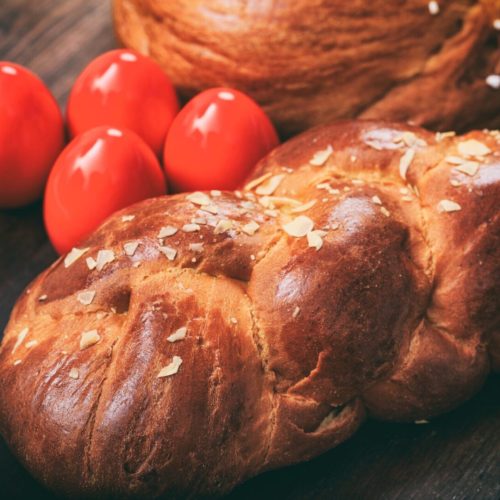
Dyed red to symbolize life and rebirth. Cracking them together (tsougrisma) is both playful and symbolic.
- Tsoureki
A soft, aromatic bread with hints of mastiha and mahleb — slightly sweet, slightly earthy.
This meal is not heavy. It’s intentional.
A transition from restraint to nourishment.
Easter Sunday — The Celebration Table
Sunday is where everything opens up.
- Roast Lamb
Slow-roasted on a spit for hours. It’s the centerpiece — not just a dish, but a communal ritual.
- Kokoretsi
A traditional delicacy made from seasoned offal, wrapped and roasted. Deeply tied to rural heritage.
- Fresh salads, local cheeses, homemade bread, and wine
Tables that stretch for hours — full of conversation, laughter, and stillness
This is not a quick meal.
It’s a full-day experience of connection.
Beyond the Food — Why It Matters
Greek Easter cuisine reflects something deeper:
Seasonality: Spring ingredients, fresh herbs, local produce
Community: Meals prepared and shared together
Rhythm: Fasting → breaking → celebration
In a world of fast consumption, this way of eating brings you back to awareness and presence.
Easter in Kalamata — Where Food Meets Nature
In regions like Kalamata, food is inseparable from the landscape.
Olive trees, wild herbs, open land — everything you eat is part of the environment around you.
Here, Easter dishes are not recreated for tourists.
They are lived, shared, and passed down.
A Different Way to Experience It — From Table to Land
Most visitors experience these dishes at a table.
But what if you experienced everything behind them?
Gathering ingredients from the land
Preparing recipes step by step
Cooking slowly, over fire
Understanding where food comes from — not just how it tastes
This transforms food from consumption → participation.
And that’s where the real connection happens.
If you want to truly understand Greek Easter, don’t just ask what to eat.
Ask:How is it prepared?
Who do you share it with?
And how does it make you feel?
This Easter, step into the full experience.
Ready to experience it yourself?
Discover authentic farm-to-table cooking just outside Kalamata.