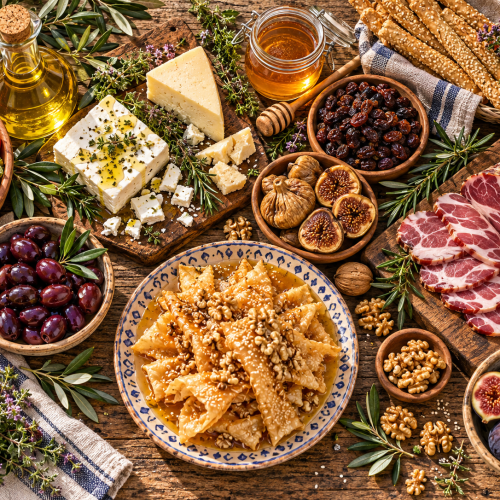
There is something special about discovering a destination through its food. In Messinia, that experience begins long before you sit down at a restaurant. It might happen while wandering through a local market in Kalamata, stopping at a small village bakery, or tasting olive oil produced by a family that has cared for its groves for generations.
Here, food is more than something to enjoy during your holiday. It is part of the landscape, the traditions and the everyday lives of the people who call this region home.
From the famous Kalamata olives to lesser-known local cheeses and handmade sweets, the traditional products of Messinia offer a delicious way to explore the region’s identity. And unlike an ordinary souvenir, many of these flavors can travel home with you.
The Flavors That Define Messinia
You cannot really talk about Messinian food without beginning with olive oil. Travel through the countryside, and you will quickly understand why. Olive groves stretch across hillsides, surround small villages and form an inseparable part of the region’s scenery.
Extra virgin olive oil is one of Messinia’s most treasured products, and tasting it where it is produced is an experience in itself. A good local olive oil can be fruity, slightly bitter and pleasantly peppery, with characteristics that vary depending on the olive variety, harvest and production methods.
If you have the opportunity to visit a local producer or olive mill, take it. Learning where the olives come from and how the oil is made can make even a simple tasting memorable.
Of course, the region is equally famous for its Kalamata olives. Their distinctive shape, rich flavor and meaty texture have made them internationally recognized. Yet tasting them in Messinia, perhaps alongside fresh bread, local cheese and a drizzle of olive oil, feels entirely different from opening a jar at home.
Cheese is another important part of the local table. One worth looking for is sfela, a traditional PDO cheese produced in Messinia and neighboring Laconia. Firm, salty and full of character, it is delicious on its own, alongside vegetables or as part of a traditional meal.
You will also encounter feta, another PDO cheese produced in the wider region, often served with fresh tomatoes, oregano and olive oil. Sometimes, the simplest combinations are the ones that best capture the spirit of Greek cuisine.
A Walk Through the Markets and Villages
One of the most enjoyable ways to discover local products in Messinia is simply to explore.
Start at a farmers’ market in Kalamata, where seasonal fruit, vegetables, herbs and other regional ingredients offer a glimpse into everyday life. Depending on the time of year, you might find juicy tomatoes, fragrant citrus fruits, fresh greens or produce harvested from nearby farms.
These markets are not just places to shop. They are places to observe the rhythm of local life, discover what is in season and perhaps exchange a few words with the people selling their produce.
As you explore smaller towns and villages, keep an eye out for traditional food shops and bakeries. This is where you may discover lalaggia, a beloved local specialty made from simple fried dough. Crisp and satisfying, they are a wonderful example of how something made with just a few ingredients can become an enduring part of a region’s food culture.
Another product deeply connected to Messinia’s agricultural heritage is the dried fig. Naturally sweet, easy to carry and perfect as a snack, dried figs have long been an important part of local production. They make an excellent edible souvenir, especially if you are looking for something that does not require refrigeration.
Raisins are another reminder of the region’s agricultural past. Small, sweet and versatile, they have traditionally been enjoyed on their own or used in local cooking and baking.
And then there are the aromatic herbs. Oregano, thyme and sage carry the scents of the Mediterranean landscape into the kitchen. A small packet of locally produced herbs might seem like a simple purchase, but it can bring back memories of Messinia long after your trip has ended.
From Local Kitchens to Traditional Sweet Treats
Not every traditional product comes neatly packaged on a shelf. Some are best discovered at the dining table.
Take syglino, for example. This traditional cured pork reflects older preservation techniques developed long before modern refrigeration. Its rich, savory character makes it a distinctive part of regional cuisine, particularly when served with simple ingredients that allow its flavor to stand out.
Then there is honey, another product worth seeking out during your travels. Its aroma and flavor can vary depending on the plants visited by the bees and the area where it is produced.
When buying local honey, ask about its origin. Whether it comes from thyme-rich landscapes, wildflowers or other flowering plants, knowing the story behind the jar makes the experience more interesting.
For those with a sweet tooth, diples are not to be missed. These delicate, crisp folds of fried dough are traditionally served with honey and often sprinkled with nuts. Closely associated with celebrations, weddings and festive occasions, they are a sweet expression of local hospitality.
You might come across them at a bakery, a traditional pastry shop or during a special celebration. Wherever you try them, they are a delicious reminder that some of the best culinary discoveries are rooted in tradition.
Bringing a Little of Messinia Home
As your trip comes to an end, you may find yourself wanting to bring more than photographs and memories back with you.
Fortunately, many traditional Messinian products make wonderful gifts or additions to your own kitchen.
A bottle of locally produced extra virgin olive oil, a jar of Kalamata olives, dried figs, raisins or a small selection of aromatic herbs can all help you recreate a little of the region’s flavors at home. Honey is another lovely option, while lalaggia and other traditional dry foods can make delicious treats to share.
If you have access to suitable refrigeration and can transport them safely, local cheeses such as sfela are also worth considering.
But choosing what to buy is only part of the experience.
When exploring food shops, markets and producers, take a moment to look beyond the packaging. Ask where the product was made, who produced it and whether there is a particular story behind it. For protected products such as PDO cheeses, checking the designation can also help you understand their geographical origin.
You may discover that the olive oil you are tasting comes from a grove just outside the village, or that the honey on the shelf was collected from hives in the nearby countryside.
These small conversations can turn an ordinary purchase into something much more personal.
Discover Messinia One Flavor at a Time
Messinia is a region that rewards curious travelers. Its beaches, villages and landscapes are beautiful, but its food offers another way to connect with the destination.
Every local product tells a small part of the region’s story. Olive oil speaks of the land and its agricultural traditions. Cheese and cured meats reflect generations of food-making knowledge. Dried figs, honey and handmade sweets reveal the ingredients and customs that have shaped local life.
You do not need an elaborate gastronomic itinerary to experience any of this. Sometimes, all it takes is a visit to a market, a conversation with a producer or a meal prepared with ingredients grown nearby.
And if you have the opportunity to experience Messinian food at its source, whether through a farm visit, an olive oil tasting or a traditional cooking experience, you will discover just how closely the region’s cuisine is connected to its people and landscape.
Because the best thing you can take home from Messinia is not simply a product.
It is the memory of where it came from, the people who made it and the experience of discovering it for yourself.