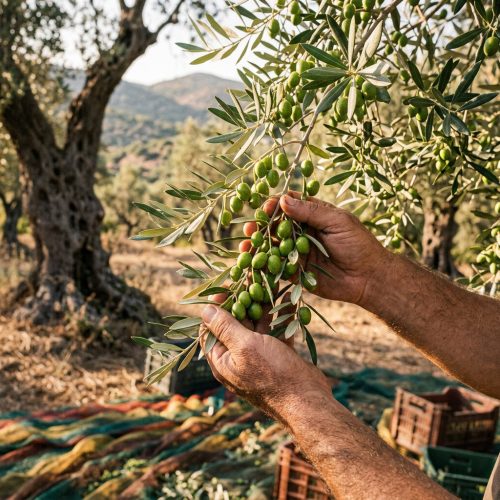
Drive through the countryside of Messinia, and one thing quickly becomes impossible to ignore: olive trees are everywhere. They cover rolling hills, stretch across fertile valleys, and surround traditional villages, creating one of the most recognisable landscapes in southern Greece.
But have you ever wondered which olives grow on these trees?
In many of Messinia’s olive groves, the answer is Koroneiki, a small but remarkable olive variety that plays an essential role in Greek olive oil production.
Unlike the large, dark Kalamata olives that many travellers recognise, Koroneiki olives are surprisingly small. Yet despite their size, they are celebrated for producing high-quality extra virgin olive oil with distinctive aromas and flavours.
For visitors interested in discovering the food and agricultural traditions of Messinia, understanding the Koroneiki olive offers a fascinating introduction to one of the region’s most important products.
What Is the Koroneiki Olive?
The Koroneiki olive is one of Greece’s most widely cultivated olive varieties, particularly in the Peloponnese and Crete.
Its name is associated with Koroni, the historic coastal town in southern Messinia, reflecting the variety’s strong connection to the region.
Although its fruit is relatively small, Koroneiki is highly valued for its oil-producing potential and the quality of the extra virgin olive oil it can produce.
The variety is well adapted to Mediterranean growing conditions, including warm summers and relatively dry environments. These characteristics have contributed to its popularity among olive growers throughout Greece and, increasingly, in other olive-producing countries.
In Messinia, Koroneiki trees form an important part of the agricultural landscape, connecting generations of local producers to a tradition that remains central to everyday life.
Koroneiki vs Kalamata Olives: What Is the Difference?
One of the most common misconceptions among visitors is that Koroneiki olives and Kalamata olives are the same.
Although both are strongly associated with Messinia, they are different varieties grown primarily for different purposes.
Kalamata olives are famous as table olives. Their larger size, distinctive almond-like shape, and rich flavour make them one of Greece’s most recognisable food products. They are commonly enjoyed as appetisers, in salads, or alongside traditional Mediterranean dishes.
Koroneiki olives, on the other hand, are cultivated primarily for olive oil production. Their smaller fruit contains oil that can develop a particularly interesting combination of fruitiness, bitterness, and pungency.
Understanding this distinction adds a new dimension to exploring Messinia’s olive-growing countryside. The trees you pass along rural roads may look similar at first glance, but the varieties and their uses reveal different sides of local agricultural traditions.
What Does Koroneiki Olive Oil Taste Like?
One of the most interesting characteristics of Koroneiki olive oil is its expressive flavour profile.
High-quality oils produced from this variety are often associated with fresh, green aromas that may remind you of cut grass, olive leaves, herbs, or green tomatoes.
When tasted, the oil may reveal a pleasant bitterness followed by a distinctive peppery sensation in the throat. These characteristics are particularly noticeable in some fresh, early-harvest oils.
For travellers unfamiliar with olive oil tasting, this can be surprising. Many people expect olive oil to taste simply smooth or mild, without realising how complex its natural flavours can be.
The peppery feeling is known as pungency, a sensory characteristic influenced by the olive variety, ripeness, processing methods, and naturally occurring phenolic compounds.
Koroneiki olive oil is also known for its favourable fatty-acid composition, often containing a high proportion of oleic acid, a monounsaturated fatty acid found naturally in olive oil.
However, not every Koroneiki oil tastes the same. Some are bold and intensely green, while others offer softer, more delicate flavours.
That diversity is precisely what makes tasting oils from different producers so interesting.
Why Harvest Timing Makes Such a Difference
One of the most fascinating aspects of olive oil production is how much the final flavour depends on when the olives are harvested.
Earlier in the season, Koroneiki olives are generally greener and less mature. Oils produced from these fruits often have more pronounced green aromas, bitterness, and peppery characteristics.
As the olives ripen, their composition changes, and the resulting oil may develop a softer, rounder flavour.
Choosing the right harvest moment is therefore an important decision for producers, who must balance fruit maturity, oil yield, weather conditions, and the style of oil they want to create.
In Messinia, harvesting generally takes place during autumn and winter, although the exact timing varies depending on the location, growing conditions, and individual producer.
During this period, the countryside transforms as nets appear beneath olive trees, harvesting equipment is brought into the groves, and freshly collected olives make their way to local mills.
For visitors exploring Messinia during harvest season, witnessing this activity offers a wonderful glimpse into the agricultural traditions behind one of Greece’s most famous products.
Why Every Koroneiki Olive Oil Is Unique
Even when two producers cultivate the same olive variety, the resulting oils can taste surprisingly different.
The characteristics of Koroneiki olive oil are influenced by several factors, including soil conditions, climate, altitude, fruit maturity, harvesting methods, and the techniques used during extraction.
Storage also plays an important role in preserving freshness and flavour.
A producer who harvests early and processes the olives promptly may create an oil with pronounced green aromas and intensity. Another producer working with riper fruit and different processing conditions may produce an oil with a milder character.
You may also encounter bottles labelled single-variety Koroneiki or monovarietal. This means the oil has been produced exclusively from Koroneiki olives rather than a blend of different varieties.
For anyone interested in olive oil tasting, comparing single-variety oils from different producers can be a fascinating way to discover how growing conditions and production decisions influence the final result.
Discovering the Koroneiki Olive in Messinia
The best way to understand the importance of Koroneiki olives is to experience the landscape where they grow.
Beyond the beaches and lively streets of Kalamata, Messinia opens into a countryside filled with olive groves, family farms, traditional villages, and agricultural communities.
Walking among the trees offers a different perspective on the olive oil served in local tavernas and family kitchens.
You begin to appreciate the care involved in cultivating the trees, the importance of seasonal changes, and the decisions producers make throughout the year.
During an olive oil tasting, you can discover how Koroneiki oils differ in aroma, bitterness, and pungency, while learning more about the journey from harvesting to extraction.
These experiences connect the flavours in the tasting glass to the land and people behind them.
For travellers interested in authentic food experiences in Messinia, exploring an olive grove or meeting a local producer can become one of the most memorable parts of a holiday.
From the Olive Grove to the Traditional Greek Table
Koroneiki olive oil plays an important role in the food culture of Messinia.
It is used in traditional vegetable dishes, fresh salads, legumes, grilled foods, and countless family recipes. Its flavour can transform even the simplest ingredients into something memorable.
A piece of freshly baked bread dipped into extra virgin olive oil, a ripe tomato dressed with local oil, or a plate of seasonal greens can reveal the importance of quality ingredients in Greek cooking.
At Mama Gaia, near Kalamata, the connection between agriculture, local ingredients, and traditional food reflects this relationship between the land and the table.
Discovering how olives grow, understanding their journey through production, and appreciating the flavours they bring to everyday meals offers a deeper perspective on the region’s culinary heritage.
It is a reminder that olive oil is not simply something added to food. In Messinia, it represents an agricultural tradition that continues to shape local life.
Frequently Asked Questions About Koroneiki Olives
What is the Koroneiki olive?
Koroneiki is a major Greek olive variety cultivated primarily for olive oil production. It is especially common in the Peloponnese and Crete and is valued for its oil quality and distinctive flavour characteristics.
Are Koroneiki olives the same as Kalamata olives?
No. Koroneiki olives are much smaller and are primarily used for producing olive oil, while Kalamata olives are larger and are mainly cultivated as table olives.
What does Koroneiki olive oil taste like?
Koroneiki olive oil often has green, fruity aromas with grassy or herbal notes, pleasant bitterness, and a peppery finish. The exact flavour depends on harvest timing, growing conditions, and production methods.
When are Koroneiki olives harvested?
Koroneiki olives are generally harvested during autumn and winter in Greece. However, the timing varies depending on the weather, location, maturity of the fruit, and the producer’s desired oil characteristics.
Is Koroneiki olive oil always extra virgin?
No. Koroneiki refers to the olive variety, not a quality classification. To be labelled extra virgin, the resulting olive oil must meet specific chemical and sensory standards.
A Small Olive with a Remarkable Story
At first glance, the Koroneiki olive may seem unremarkable compared with the larger olives commonly served at Greek tables.
But behind its small size lies an important part of Messinia’s agricultural identity.
From the olive groves surrounding Kalamata to the local mills that transform freshly harvested fruit into extra virgin olive oil, Koroneiki connects the region’s landscape, food culture, and generations of agricultural knowledge.
The next time you enjoy a traditional Greek meal with a generous drizzle of olive oil, take a moment to appreciate the flavours it brings to the table.
Perhaps you will recognise the grassy aroma, the gentle bitterness, or the peppery sensation that makes a fresh Koroneiki oil so distinctive.
And if you have walked among the olive trees of Messinia, those flavours may bring back memories of the countryside, the people who cultivate it, and the traditions that continue to shape this beautiful corner of Greece.
Discover Messinia — where even the smallest olive carries a story of the land, its people, and its flavours.